English
 Arabic
 French
 Spanish
 Portuguese
 Deutsch
 Turkish
 Dutch
Dutch
 Italiano
 Russian
 Romaian
 Portuguese (Brazil)
 Greek
Greek
University in Anhui Gives 150¥ Cash to Every Student as Holiday Gift
Hefei |
2025-10-01 02:14:22
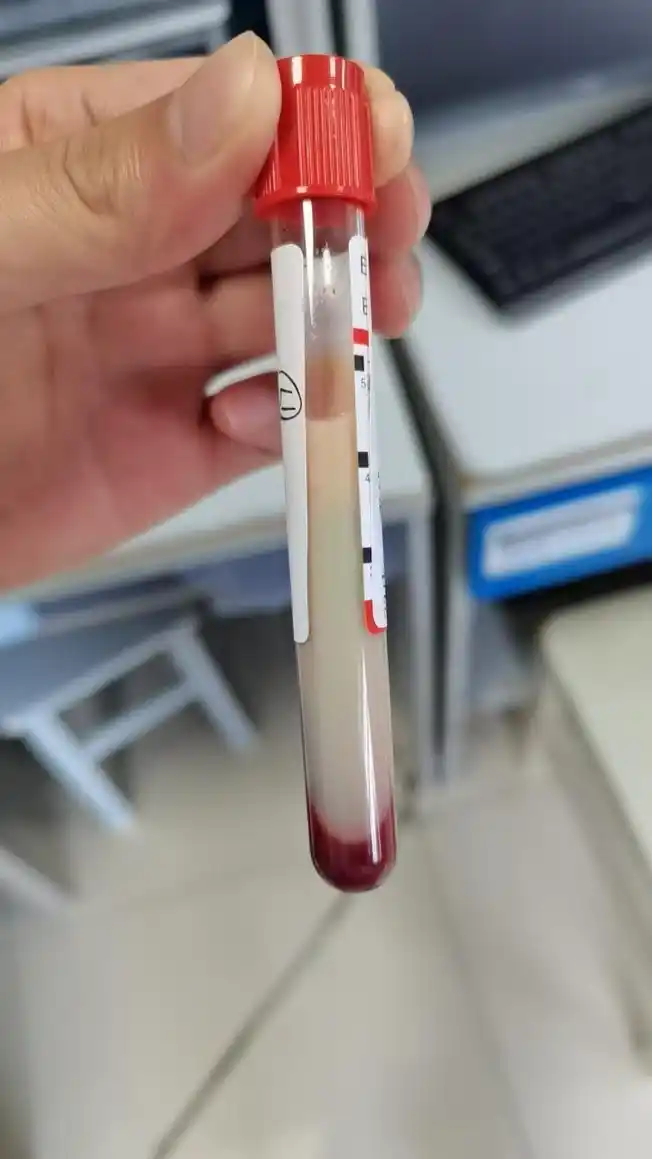
Recently, Changsha has been experiencing hot weather, and for many residents, barbecue, beer, and late-night snacks have become the “standard combo.” A 29-year-old man named Zhang Qiang (alias) was no exception. After a recent dinner gathering, he suddenly suffered from severe abdominal pain and vomiting. His friends rushed him to the Department of Gastroenterology at Changsha Central Hospital (affiliated with the University of South China).
To everyone’s shock, the blood drawn from his body was not red — it was milky white.
Tests showed extremely high levels of blood sugar, triglycerides, cholesterol, and serum amylase. Doctors diagnosed him with severe acute pancreatitis caused by hyperlipidemia, and he was immediately transferred to the ICU for blood filtration therapy. It took three days before he was out of danger.
A “Milky” Warning Sign
“The patient had very poor eating habits,” explained Dr. Yi Yanrong, Deputy Director and Chief Physician of the hospital’s Gastroenterology Department. “He loved hotpot and barbecue, rarely ate fruits or vegetables, never exercised, and never went for checkups. He didn’t know his blood lipids were already extremely high. Before admission, he drank a lot of beer and ate seafood and barbecue — that combination was the final trigger that detonated the ‘hyperlipidemia bomb’ inside him.”
Lab results were shocking: his triglyceride level reached 74.1 mmol/L (the normal value is below 1.7 mmol/L) — more than 43 times higher than normal. The blood that was drawn appeared white and, after centrifugation, looked like milk with visible floating particles — a result of excessive fat content in the bloodstream.
How High Blood Fat Triggers Pancreatitis
1. “Oil Flooding” — When triglycerides rise above 5.6 mmol/L, the risk of pancreatitis increases sharply; above 11.3 mmol/L, it becomes highly likely. The blood thickens, making circulation sluggish.
2. Pancreas “Drowning” — Excess fat accumulates in pancreatic capillaries and is broken down by pancreatic lipase.
3. Fatty Acid “Corrosion” — The breakdown produces large amounts of toxic free fatty acids that directly damage pancreatic cells, leading to a severe inflammatory storm — acute pancreatitis.
Life-Saving Treatment
With triglyceride levels far beyond the critical limit, blood filtration therapy (similar to dialysis or plasma exchange) was essential. This process quickly removed excess fat particles from his blood. Along with fasting, pancreatic suppression, and lipid-lowering medications, Zhang’s condition stabilized after three days.
Expert Health Advice
Dr. Yi warns that Zhang’s case is not rare — youth is no longer an immunity card against lifestyle-related diseases.
Key recommendations:
Regular checkups: Especially for those who are overweight, have diabetes, or a family history of high cholesterol.
Control fat intake: Avoid fried foods, fatty meats, and organ meats; beware of hidden fats in salad dressings, pastries, and snacks.
Reduce sugar and refined carbs: Sweet drinks, desserts, and white rice or noodles can boost liver fat synthesis.
Limit or quit alcohol completely.
If triglycerides exceed 5.6 mmol/L, lifestyle changes alone may not be enough — medical treatment under a doctor’s guidance (e.g., fibrates or prescription-grade fish oil) is necessary. Avoid overeating, control fat intake, and stay vigilant — prevention is far easier than facing a “milky blood” emergency.